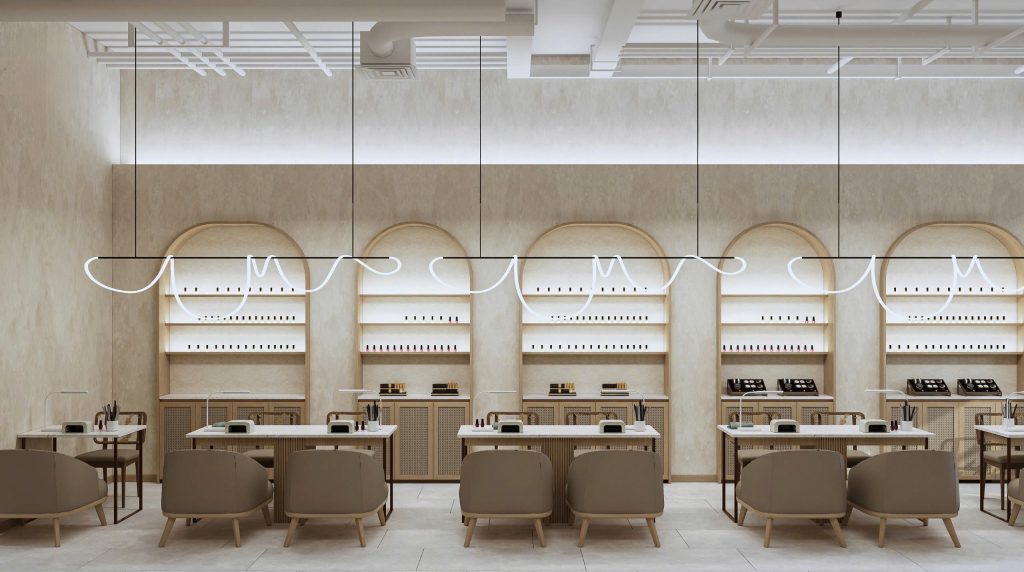
Vnspace Interior offers a fresh approach to achieving the professionally designed space you’ve always dreamed of — without breaking the bank. By blending the convenience of online tools with the expertise of real interior designers, we deliver a customized design experience that’s seamless and stress-free. Choosing Vnspace Interior means opting for an affordable, low-risk way to elevate your home with style and purpose — all tailored just for you.
Your satisfaction is our top priority.
If you’re not fully happy with the initial design concepts, we’ll collaborate with you to make the right revisions — whether that means matching you with a different designer or presenting new design options. We’re dedicated to creating a space that truly captures your vision and meets — or even surpasses — your expectations.
When designing the interior, you can absolutely keep the old furniture if:
The quality is still good: The old furniture is still sturdy, not damaged or degraded much.
Suitable for the new style: Check if the old furniture is suitable for the new design style you intend to do. If not, you may have to modify or coordinate colors and materials to harmonize.
Cost savings: Keeping the old furniture helps you save on the cost of buying new ones.
Memory or aesthetic value: If you have furniture with memory value or a special design, keeping it will create a highlight for the space.
You can combine old and new furniture in a smart way to make the space both modern and unique. Do you want me to advise you on how to combine old and new furniture beautifully?
When designing the interior, to ensure long-term durability, you should prioritize the following materials:
Natural wood (oak, xoan, walnut): Very durable, good load-bearing capacity, easy to repair and create luxury. But need to be treated against termites and moisture.
High-quality industrial wood (green core MDF, moisture-proof HDF): Reasonable price, smooth flat surface, easy to construct, but less durable than natural wood, susceptible to moisture if not treated properly.
Metal (stainless steel, stainless steel, powder-coated aluminum): Very durable, good load-bearing capacity, suitable for making frames or legs of tables and chairs.
Tempered glass: Durable, good load-bearing capacity, easy to clean, creating a sense of spacious space.
Natural stone or artificial stone (granite, artificial marble): Durable, good load-bearing capacity and heat-resistant, often used for table tops and kitchens.
High-quality synthetic materials (ABS plastic, acrylic): Good durability, easy to shape, moisture-proof, used for some modern interior details.
In short, depending on the purpose of use and budget, you can choose materials that are both durable and beautiful. Do you want me to advise specifically for which room or type of furniture?
Engineered wood and natural wood both have their own advantages and disadvantages, so depending on the purpose and budget, you choose the appropriate one:
Natural wood:
Industrial wood:
If you want durable, luxurious furniture, natural wood is a good choice. But if you need to save costs, want diverse designs, easy to change, industrial wood is suitable.
Do you plan to use it for any type of furniture so I can advise you more specifically?
Industrial wood and natural wood both have their own advantages and disadvantages, so depending on your purpose and budget, you should choose the appropriate one:
Natural wood:
Industrial wood:
If you want durable, luxurious furniture, natural wood is a good choice. But if you need to save costs, want diverse designs, easy to change, industrial wood is suitable.
Do you plan to use it for any type of furniture so I can advise you more specifically?
The decision is completely up to you.
While we provide tailored shopping support to streamline your experience, you’re welcome to handle the purchases on your own. Our adaptable process also allows us to incorporate your existing, beloved pieces into the updated design effortlessly.
Additionally, as one of our valued clients, you’ll enjoy lifetime access to exclusive trade discounts—even after your project wraps up. This ensures lasting savings and perks, so your space can continue to grow and change with you.
Of course! At the beginning of your design questionnaire, you’ll be asked to indicate which items you’d like to keep or include in your updated space. You’re also welcome to share any favorite pieces with your designer as you collaborate.
All we ask is that you provide a product link or two clear photos of each item you’d like to include, along with its dimensions.
Absolutely!
We also work with international clients and are fully capable of coordinating with retailers in your country. Some of our overseas clients choose to order everything from U.S.-based stores to cut costs and have their items shipped via freight forwarding services.
We send updates for each shipped item, including emails and tracking links whenever available.
we’ll share estimated delivery dates within your order summary.
For items that require in-home delivery, the delivery team will reach out to you by phone about a week in advance to arrange a specific delivery date and time slot.
In case an item becomes unavailable, we’ll collaborate with your designer to suggest a suitable alternative.
Feel free to reach out to us at info@vnspaceinterior.com and let us know your preferences. Some items or vendors frequently restock, so if you truly love a piece, we may recommend waiting a few weeks for it to become available again.
We work with over 100 handpicked vendors, spanning from popular retail names to exclusive trade-only providers.
This variety enables us to cater to a broad range of aesthetics, budgets, and personal preferences.
2D design is the process of creating flat images, which have only two dimensions: width and height (x and y axes). It involves the use of tools and techniques to create two-dimensional drawings, images, or artwork for various purposes, such as illustration, graphic design, or technical drawing.
3D design (or 3D graphic design) is the process of creating three-dimensional models and images of objects, characters, environments, etc. using specialized computer software. It uses three-dimensional representations of geometric data to create 3D images, giving a more realistic and lifelike feel than 2D design.
Construction and interior design time depends on many factors such as project area, complexity, design style, and construction progress. However, you can refer to the average time as follows:
(including 2D drawing, 3D perspective construction and technical documents)
Type of space Design time (estimated)
(1000-2000 sqf ) 5 – 7 days
(2000-5000 sqf ) 7-10 days
(5000-10,000 sqf ) 10-15 days
Note: time may vary depending on the number of edits and level of detail of the project.
Our designers are not only graduates from top-tier design schools, but also bring real-world experience around the nation, award-winning studios, and innovative start-ups. Whether your style is modern minimalism or timeless elegance, our curated team covers every aesthetic and budget. Each professional is rigorously vetted, highly qualified, and ready to turn your vision into reality — with style, precision, and flair.
Step 1: Survey the current status (area, structure, electricity and water systems…).
Take photos, measure the space. Consult on suitable design styles
Design the floor plan (2D layout) to divide the space, arrange furniture, and functions.
Send to the customer for approval before going to 3D.
Step 2: Design 3D perspective
Build 3D perspective for each space, Show specific colors, materials, lighting, and furniture. Send to the customer for editing if needed
Step 3: Implement technical construction documents
After approving 3D, the design unit implements technical drawings: details of furniture, electricity and water, ceiling, floor, lighting…
This is a document for construction exactly according to the design.
Favorite aesthetic & style
Estimated investment level: for design and/or construction.
Desired Time and Progress
It is absolutely possible to design an interior that is both beautiful and functional – that is also the top goal in modern design. To achieve this, you need to combine aesthetics with practicality. Here are some principles and suggestions to do that:
Clearly define your needs
Optimizing space
Minimalism but sophistication (Minimalism or Scandinavian style)
Use light and color intelligently
If you want, I can support you with drawing ideas, functional zoning, or detailed advice for each space.
Yes, you can absolutely combine many interior design styles – this is called Mix & Match design style. When done correctly, your space will be very personal, unique and clearly reflect your personal aesthetic taste. However, if the combination is not balanced, the space can easily become confusing and lose harmony.
To successfully combine many styles, you need to note:
Choose 1 main style
Color consistency
Materials and shapes must have common points
Balance between decoration and function
Don’t forget lighting
Some popular combinations:
If you want, I can give you specific advice:
I have some interesting style combination ideas that I think you might like or get inspired by:
Scandinavian + Industrial
Modern + Vintage
Japandi (Japanese + Scandinavian)
Bohemian + Coastal
If you like, I can help you come up with detailed ideas for one of the above styles, or try to coordinate as you like. Which style do you find most interesting, or what other styles do you want to try mixing?
3D designs are often very close to reality, but there may be slight differences in color or texture due to real-life lighting, reflections, and materials.
Modern 3D software can simulate light, shadows, and surface textures very accurately, helping you visualize the finished space clearly. However:
You’ll stay closely connected with your designers using Vnspace’s easy-to-use online platform. It allows you to share inspiration, give feedback, and discuss project details directly — all on your schedule. The platform also supports file uploads and video calls, making it effortless to exchange photos, documents, and ideas. This smooth, tech-enabled collaboration blends the personalized touch of working with a designer with the convenience of digital communication.
Our designers gain a deep understanding of your style through a detailed questionnaire, your project brief, inspiration images, and ongoing feedback. This tailored process guarantees that the final design reflects your personal taste and fits perfectly with your lifestyle.
Usually, an interior design package will include:
Other costs to consider when doing interior design:
If you provide a specific area and type of project (for example: 2000 sqf nail salon, 3000 sqf etc.), I can estimate the design costs in more detail for you.
Does it need to be completed by a specific time?
Yes, I can absolutely help you design the interior according to your budget. You just need to provide me with some of the following information:
For example: 50,000 USD, 100,000 USD
For example: 1000 sqf, 2000 sqf…
For example: modern, minimalist, Scandinavian, classic, Japandi, etc.
Once we have enough information, we will brainstorm ideas and make design suggestions that fit your budget, including material, color and furniture choices.

If something in your design doesn’t sit right with you, just reach out — we’re here to support you. We'll make any needed adjustments to ensure you’re completely satisfied. Your happiness is our promise.
Discover your unique decorating style with our fast, easy, and accurate interior style quiz!