1.What is Neoclassical interior style?
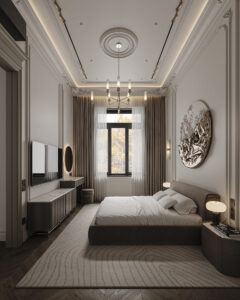
Neoclassical is a subtle return to ancient architectural values from Greece and Rome, combined with modern aesthetics to create a style that is both luxurious and elegant.

Semantically, “Neo” means new, while “Classical” refers to the classical architectural foundations. This combination brings a fresh, softer look to ancient forms without losing cultural and historical depth.

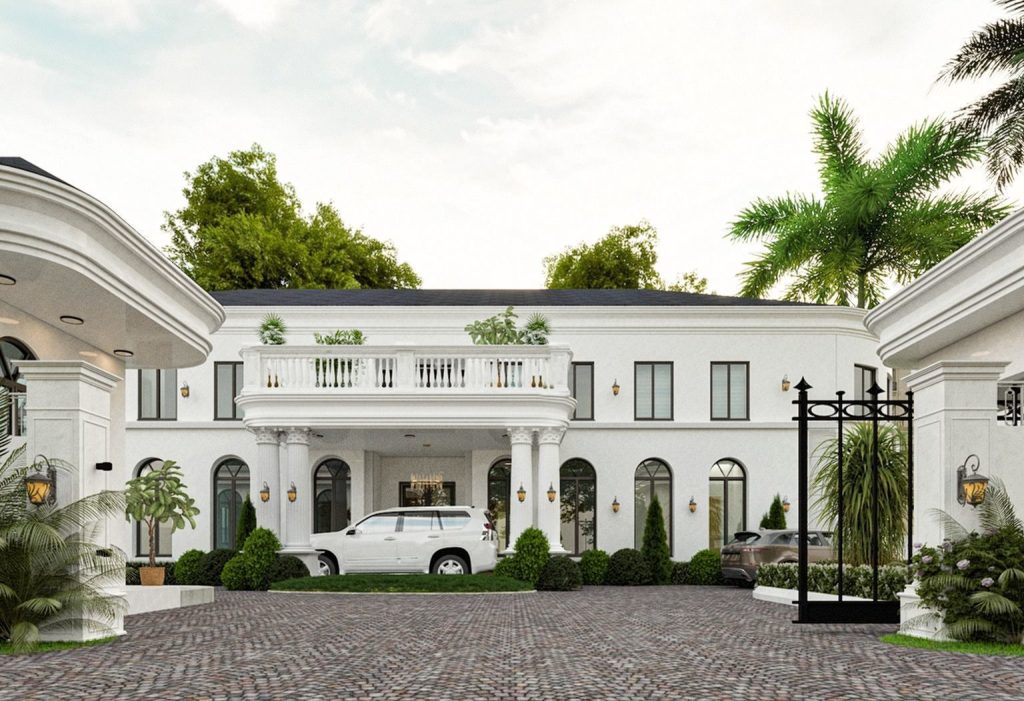
Typical architecture such as the United States Capitol clearly illustrates the Neoclassical style – inspired by the Pantheon dome, expressing grandeur but still elegance.
2.History of Neoclassical style
Neoclassical style began to appear in the 18th century, as a reaction to the excessive sophistication and ostentation of Baroque and Rococo. This style quickly spread and developed strongly in the 19th century.
Although there is no official “father”, Rome is considered the birthplace of the movement. Artists and architects of this period reshaped the Greco-Roman heritage, combining it with the spirit of the Renaissance to create a new design language – a harmony between history and modernity.
3.Characteristics of Neoclassical style
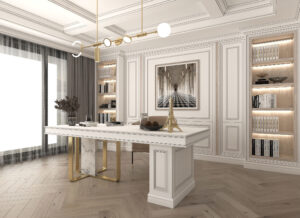
Neoclassical style stands out with details such as pillars, domes, and moldings – bearing the spirit of the classical style but more restrained in terms of decoration.
Symmetry, standard proportions, and smooth surfaces are the characteristics. Unlike Baroque, this style eliminates flashy elements, instead emphasizing elegance, sophistication, and logic in structure.
In addition to form, Neoclassical style also conveys cultural and historical messages and honors eternal artistic values.
4. Comparison between Classical and Neoclassical
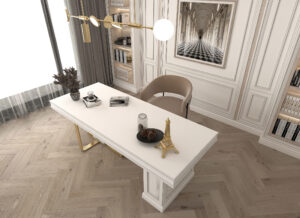
Despite their similarities in origin, these two styles still have significant differences
4.1. Classical:
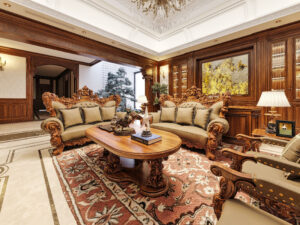
- Appeared earlier, focused on ideal perfection and detailed decoration.
- Often used complex shapes, heavy materials.
- Preferred large scale, creating a sense of grandeur.
4.2. Neoclassical:
- Born later, is the refinement of classical.
- Minimize decoration, prioritize function and gentle aesthetics.
- Take advantage of modern materials, more compact structure.
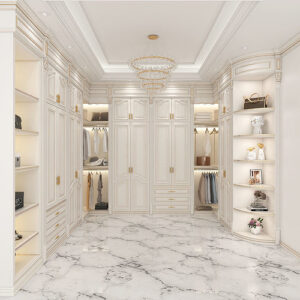
The form may be the same, but the design philosophy has changed: from a worship of majestic beauty to an emphasis on simplicity and sophistication.
5.Elements of Neoclassical design
5.1. Doors and windows
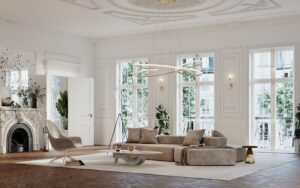
Doors in Neoclassical style not only have the function of opening and closing, but are also impressive architectural details. Arched or rectangular shape, large size, and bronze handles are common features.
5.2. Color and material
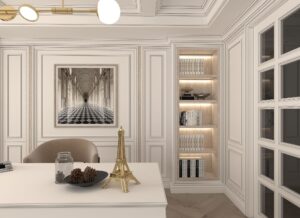
The main color palette includes white, cream, beige, dark brown… creating a gentle and high-class space. Commonly used materials are marble, natural wood, combined with leather, velvet, brocade and sometimes metallic.
5.3. Interior
Neoclassical interiors have elegant, balanced shapes. Oak and walnut wood are used with sophisticated carving techniques. Geometric motifs, stone inlays, and lacquer are also often used.
5.4. Decorative accessories
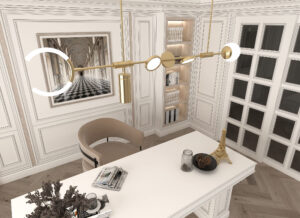
Decorative elements such as velvet pillows, sculptures, crystal vases… have a classic character. Vine patterns and symmetrical geometric shapes are often used to maintain visual balance.
5.5. Floor
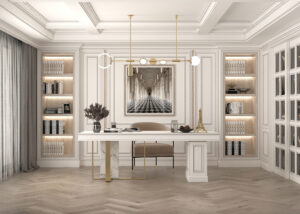
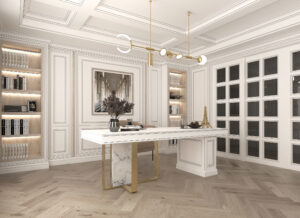
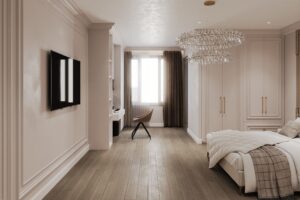
Natural stone or wood floors, with Chevron, herringbone patterns… bring luxury. With stone tiles, you should combine border details or patterned accents in the center.
5.6. Rugs
Large, thick, classically patterned rugs help define functional areas, creating coziness and order. Prefer natural wool or easy-to-maintain synthetic fibers.
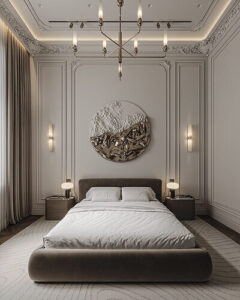
5.7. Walls, ceilings and partitions
The space often has a high ceiling, using plaster or PU moldings to create shape. Wallpaper, wall coverings or wood veneer create visual depth.
5.8. Lighting
Warm yellow light (2700–3000K) is ideal. Crystal chandeliers, wall lamps, and table lamps are flexibly arranged depending on the space. In particular, dining room and bedroom lights need to ensure proper function and create a comfortable feeling.
5.9. Common mistakes
Some common mistakes when designing Neoclassical:
- Overuse of details destroys the elegance.
- Wrong color scheme causes confusion.
- Using poor quality materials.
- Unbalanced design, or not suitable for the culture/lifestyle of the homeowner.
- Not calculating the budget properly leads to unfinished projects.
6. Neoclassical – Timeless beauty
Neoclassical style is not only an aesthetic choice but also shows the class, lifestyle and cultural understanding of the homeowner. This is a style for those who love sophistication, are not afraid to invest, and want a space with lasting value over time.